
Global Manufacturing Models: Key Factors in Choosing Between OEM and ODM
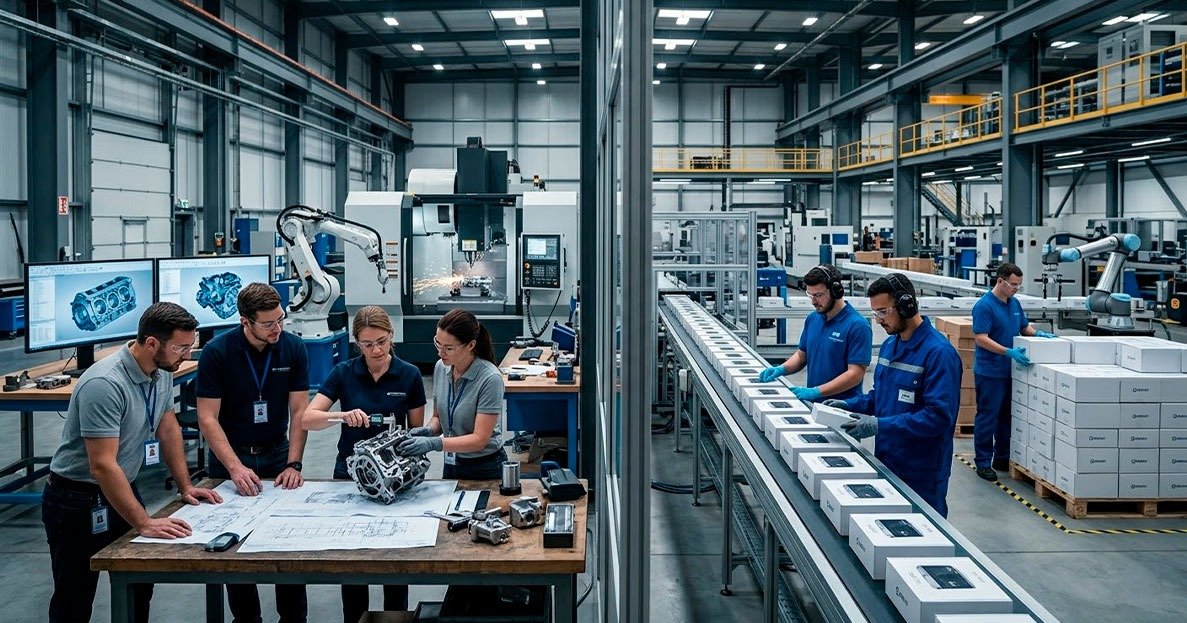
In an increasingly globalized world, choosing the right manufacturing model is one of the most strategic decisions for brands, entrepreneurs, and industrial buyers. Two of the most widely used models in global manufacturing are OEM (Original Equipment Manufacturer) and ODM (Original Design Manufacturer). Although they are often confused, each one serves different needs and markets, offering specific advantages depending on business goals.
OEM (Original Equipment Manufacturer)
An OEM refers to a company that manufactures products fully designed by the client. In this model, the buyer (the brand) provides the specifications, drawings, and requirements, and the manufacturer is responsible for producing the product exactly according to those instructions.
This approach allows the buyer to:
- Have full control over the product’s design and intellectual property.
- Develop unique products that stand out in the market.
- Create solutions tailored to specific performance, material, and certification requirements.
However, it usually involves higher upfront investment costs, longer development timelines due to design, prototyping, and testing, and higher minimum order quantities because of the customized production structure.
ODM (Original Design Manufacturer)
On the other hand, an ODM offers a more comprehensive solution: the manufacturer not only produces the product, but also provides a pre-developed base design that the client can slightly customize, for example through branding, color, or packaging, before bringing it to market.
In this model:
- The manufacturer owns the original design and, in many cases, the intellectual property.
- Products are closer to market readiness, which reduces manufacturing lead times.
- Initial costs are lower, since no investment in design or development is required.
Minimum order quantities are usually more accessible, making it easier for startups or brands with tighter budgets to enter the market.
Ideal Markets for OEM
The OEM model is common in industries where differentiation and intellectual property are essential, such as advanced electronics, automotive, industrial machinery, or specialized technology products.
It is especially suitable for established brands seeking exclusive products with a strong identity, as well as for companies competing in premium segments where technical innovation makes the difference.
Ideal Markets for ODM
The ODM model mainly benefits emerging companies, startups, and brands that want to enter the market quickly without taking on major upfront investments in design and engineering.
It is also common in consumer goods, retail, and private-label brands that work with existing base products and focus their strategy on branding, marketing, and distribution.
Main Differences Between OEM and ODM
The most important difference between these two models begins with design and intellectual property. In the case of OEM, the client retains full control over the product’s design and IP. In the ODM model, by contrast, the design belongs to the manufacturer, and the buyer works from an already developed base.
Another key difference is time to market. With OEM, the process is usually longer because of the design, development, prototyping, and testing stages. With ODM, since it starts from an existing design, timelines are significantly shorter.
In terms of upfront investment, the OEM model requires greater resources for research and development, tooling, and technical validation. ODM involves lower costs because it does not require development from scratch.
Customization also varies. OEM allows for a high degree of adaptation and fully tailor-made products, while ODM limits customization mainly to branding, aesthetics, or minor adjustments.
Finally, minimum order quantities tend to be higher in OEM, while in ODM they are generally more flexible and accessible.
What Type of Buyer Benefits Most from Each Model?
OEM buyers are usually companies with a long-term vision that want to build their own intellectual property and clearly differentiate themselves from the competition. They are willing to invest more in development in order to obtain an exclusive product.
ODM buyers, on the other hand, prioritize speed and risk reduction. They are brands that want to launch products quickly, validate markets, or expand their portfolio without committing major resources to R&D.
Which One Should You Choose?
The choice between OEM and ODM is not about determining which one is better, but rather about identifying which one aligns best with your strategic objectives.
When the priority is to develop a distinctive product with full control over design and intellectual property, the OEM model provides the right structure to build differentiation and long-term value.
By contrast, when the focus is on accelerating market entry, reducing upfront investment, and minimizing risk, the ODM model becomes an efficient and strategic alternative.
Ultimately, the decision depends on the level of customization required, the available investment capacity, and the speed at which a company wants to compete in the market.
Boost Your Strategy at Global Supplier
Choosing between OEM and ODM requires clear information and reliable partners. Global Supplier International Trade Show is the event that connects manufacturers, brands, and international buyers in an environment focused on real business opportunities.
A concrete opportunity to make informed decisions and move forward with greater competitiveness in the global market.
Register now for Global Supplier and take part in this strategic meeting: JOIN HERE
References:
https://www.lianjer.com/oem-vs-odm
OEM vs. ODM: What You Need to Know About Manufacturing Models
https://www.gematchina.com/es/oem/odm-vs-private-label-how-to-choose-the-right-business-model
https://hisoair.com/whats-the-difference-between-oem-and-odm-manufacturing
OEM vs. ODM: What’s the Difference and Why It Matters


