
Electric Scooters and Motorcycles: A Market on the Rise
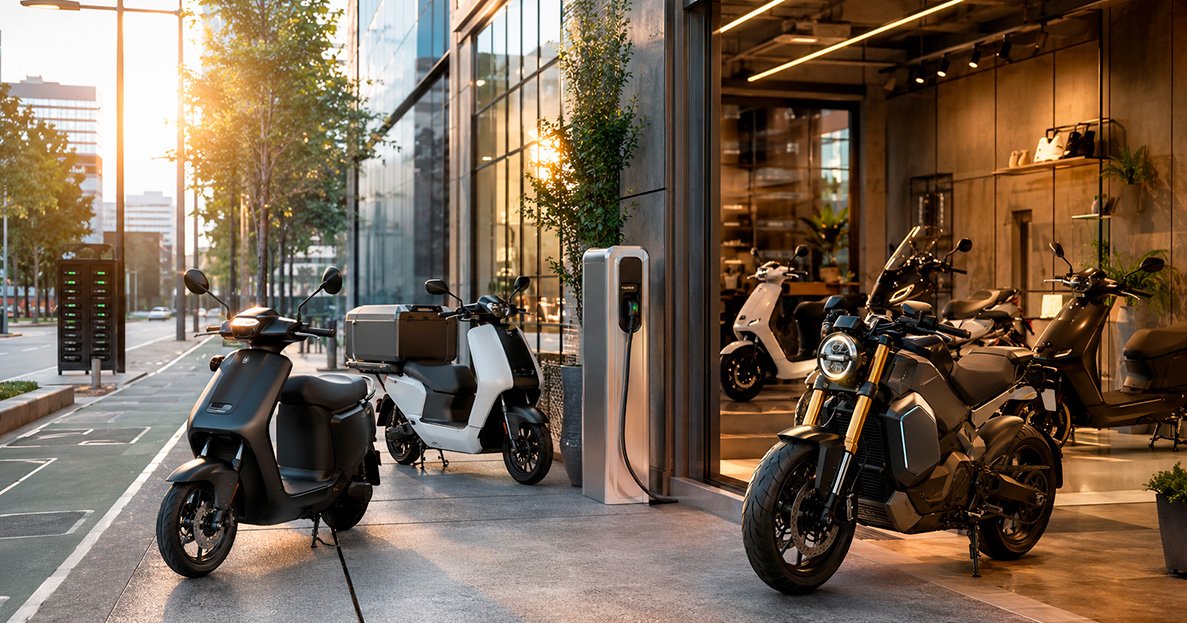
Urban mobility is evolving rapidly, and electric scooters and motorcycles have emerged as some of the most visible drivers of this transformation. Fueled by the need to reduce emissions, lower operating costs, and adapt to changing consumer behaviors—such as the continued growth of delivery services—this market is experiencing significant expansion. Far from being an emerging innovation, electric two-wheelers have become a practical, scalable solution that is increasingly integrated into cities around the world in 2026.
A Market Gaining Momentum
According to Global Market Insights, the global electric scooter and motorcycle market has sustained compound annual growth rates (CAGR) exceeding 10% in recent years, with projections placing the industry above $100 billion before 2030.
Several structural factors are driving this growth:
- Government incentives and environmental regulations encouraging transportation electrification.
- Declining lithium battery costs, improving competitiveness against internal combustion vehicles.
- Lower operating expenses, making electric models particularly attractive for delivery fleets.
- Advances in connectivity, including IoT integration, telematics, and intelligent fleet management systems.
Beyond the numbers, there is also a cultural shift underway. Urban consumers are increasingly embracing mobility options that are more efficient, cost-effective, and environmentally responsible.
Asia-Pacific: The Established Leader
The Asia-Pacific region continues to dominate the market. Countries such as China, India, and Vietnam account for the majority of electric scooter production and adoption. In China, for example, these vehicles have been a common part of everyday urban life for more than a decade, with millions currently in operation.
This leadership is supported by several factors:
- High urban population density.
- Restrictive policies targeting combustion-engine vehicles.
- Well-established manufacturing ecosystems.
- More advanced charging infrastructure and battery-swapping networks.
As a result, Asia-Pacific is not only shaping the market today but also setting the pace for technological innovation and cost reduction worldwide.
Latin America: An Emerging Opportunity
Meanwhile, Latin America is steadily gaining traction. Research from IMARC Group indicates that the region’s electric scooter market is expanding due to factors such as increasing urban congestion, rising fuel prices, the introduction of sustainable mobility initiatives, and the continued growth of e-commerce and delivery services.
In countries such as Mexico, Brazil, and Colombia, electric scooters are being adopted by both individual consumers and delivery platforms. Government-led initiatives promoting sustainable transportation are also beginning to create a more favorable business environment.
However, the region still faces important challenges, including limited infrastructure, a lack of robust tax incentives, and restricted access to financing for end users.
Key Trends Reshaping the Industry in 2026
1. The Expansion of Battery Swapping
Battery-swapping business models are gaining momentum, particularly in Asia, and are beginning to expand into other regions. By significantly reducing charging times, this approach addresses one of the most persistent barriers to adoption: range anxiety.
2. New Technologies Beyond Lithium
While lithium-ion batteries continue to dominate the market, sodium-ion technology is emerging as a promising alternative. Potential advantages include lower costs, greater material availability, and improved sustainability, all of which could reshape the industry’s cost structure in the years ahead.
3. Digital Integration and Connectivity
Electric scooters are no longer just vehicles—they are connected platforms. Integration with mobile applications, geolocation services, predictive maintenance tools, and data analytics is transforming the user experience while helping logistics companies improve operational efficiency.
Structural Challenges Still Ahead
Despite its strong growth trajectory, the industry must overcome several obstacles to achieve broader adoption:
- Insufficient charging infrastructure, particularly in emerging markets.
- Higher upfront costs compared with conventional alternatives.
- Continued reliance on government incentives, raising questions about long-term sustainability.
- Battery supply chain vulnerabilities tied to fluctuations in raw material availability and pricing.
Addressing these challenges will be essential to turning today’s growth into widespread, long-term adoption.
From Emerging Trend to Market Reality
Electric scooters and motorcycles have already established themselves as practical solutions for urban mobility and last-mile logistics, supporting more efficient and sustainable cities. Transportation electrification is now a critical component of urban transformation.
Against this backdrop, 2026 marks the beginning of a new phase of global market consolidation. With Asia leading the way, Latin America on the rise, and new technologies entering the market, the industry is approaching a defining moment.
For businesses, the question is no longer whether to participate—but how to anticipate and capitalize on a transformation that is already well underway.
Register today and don’t miss the opportunity to grow your business at Global Supplier:
References:
https://www.grandviewresearch.com/industry-analysis/electric-scooters-market
https://www.imarcgroup.com/latin-america-electric-scooter-market
https://www.gminsights.com/es/industry-analysis/electric-motorcycles-and-scooters-market
https://blog.sendaciti.com/scooters-mexico-solucion-movilidad-desafio-urbano
https://www.enelamericas.com/es/historias/a202110-la-movilidad-elctrica-y-sus-ventajas0.html


