
Top Innovations in Electrical Components for 2026
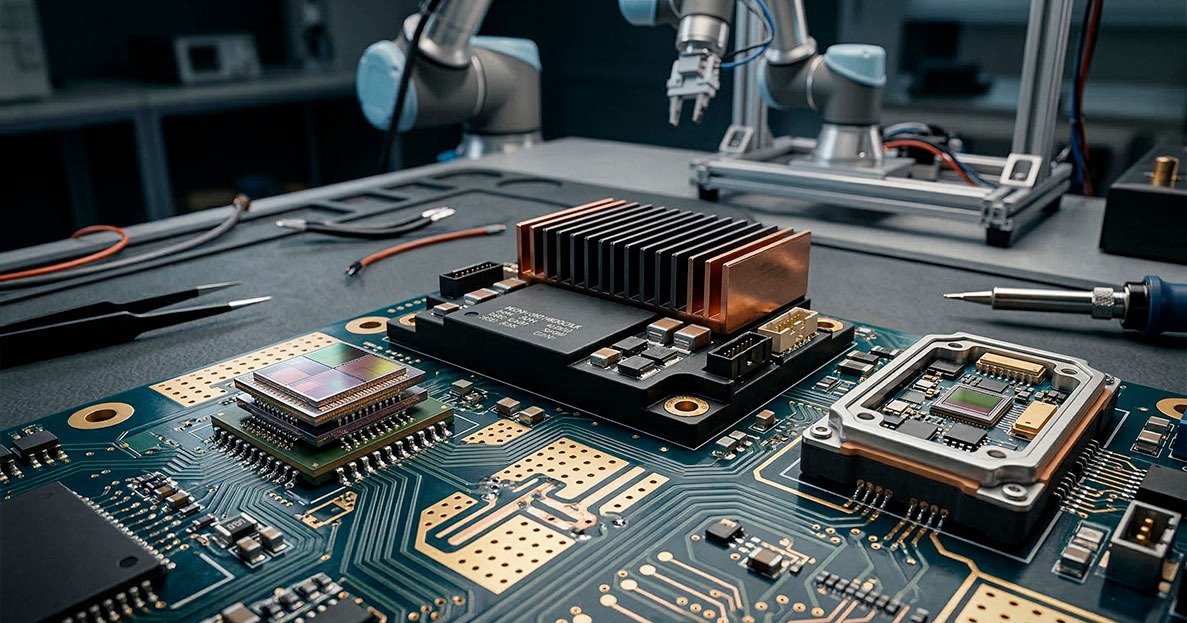
The electrical components sector is undergoing a major transformation driven by rising demands for energy efficiency, miniaturization, digitalization, automation, and advanced new materials. These technologies are not only addressing the current needs of industries such as automotive, telecommunications, and renewable energy, but are also redefining the very architecture of electrical and electronic systems for the near future.
1. Energy efficiency: wide-bandgap semiconductors as key enablers
Wide-bandgap materials such as SiC (silicon carbide) and GaN (gallium nitride) are revolutionizing power components. These semiconductors can operate at higher voltages and temperatures with lower energy losses, resulting in more efficient and compact systems. They are critical for applications such as electric vehicles, renewable energy infrastructure, and high-performance consumer electronics.
In addition, integrating power management functions into compact modules reduces complexity and improves overall system efficiency.
2. Miniaturization and advanced packaging
Function densification is essential for increasing efficiency without adding size or power consumption. Technologies such as 2.5D and 3D packaging, as well as system-in-package (SiP) solutions, make it possible to integrate multiple functions — control, power, and communications — into smaller, more efficient structures, accelerating system performance in critical applications such as AI, 5G networks, and next-generation power systems.
At the same time, advances in PCBs (printed circuit boards) using high-performance materials such as PTFE, ceramics, and metals with improved thermal dissipation are enabling the design of more efficient and robust solutions, which are essential for high frequencies and high power densities.
3. Smart digitalization and process automation
Digitalization is transforming not only products, but also the way they are manufactured:
Smart sensors and predictive diagnostics integrated into electrical components (e.g., transformers and sensors) make it possible to monitor performance and operational health in real time, reducing downtime and costs.
AI-driven automation and autonomy in electronics manufacturing reduce human intervention, optimize energy consumption, and improve assembly quality across production processes.
At the supply chain level, digitalization and technologies such as blockchain are increasing component traceability and authentication, reducing counterfeiting risks and improving logistics efficiency.
This convergence of automation and digitalization allows factories to adapt in real time to market demands, optimizing resources and minimizing waste.
4. Advanced materials and new design paradigms
The electrical materials of the future are being redesigned for extreme performance:
New insulating and dielectric materials for transformers and other components improve reliability, reduce losses, and extend service life, especially under severe operating conditions.
Nanomaterials and high-conductivity compounds are enabling more compact and efficient designs, addressing the thermal challenges that arise as power densities continue to increase.
5. Sustainability and environmental responsibility
These advances are also focused on reducing environmental impact:
Components and processes free of hazardous substances, along with improved recyclability, are now key design priorities.
The use of biodegradable oils and eco-friendly dielectric fluids in industrial and distribution transformers reduces environmental risks and responds to increasingly strict regulations.
This green approach aligns with global carbon reduction and energy efficiency requirements, adding value for both manufacturers and end users.
Transforming tomorrow’s efficiency, connectivity, and performance
By 2026, the convergence of greater energy efficiency, miniaturization, advanced digitalization, full-scale automation, and next-generation materials is redefining what we currently understand as electrical components. These trends are not only responding to specific technical demands, but are also shaping an ecosystem where sustainability, embedded intelligence, and interoperability will be the norm.
Suppliers and designers that adopt these innovations will gain a competitive edge and lead the transition toward more robust, efficient, and responsible systems.
Register now for Global Supplier and be part of the technological transformation: BE PART OF IT HERE
References:
The Future of PCB Technology: Trends to Watch in 2026 and Beyond
https://www.maliotech.com/es/news/key-developments-in-current-transformer-technology-for-2026
Impulsando el mañana
Electronics Manufacturing Trends 2026: $400B Fab Equipment Cycle Meets Cyber & Circularity Pressure
https://thorsmex.mx/blog/novedades-en-materiales-electricos-en-mexico-para-2026
Las principales innovaciones de esta década en el sector del material eléctrico
https://www.konlidainc.com/es/article/2026.html
https://www.konlidainc.com/es/article/2026.html
https://www.elektron.com.mx/blog/post/innovaciones-en-conductores-electricos-lo-ultimo-en-tecnologia


