
Printed Electronics: The Flexible and Cost-Effective Revolution in Electronic Design
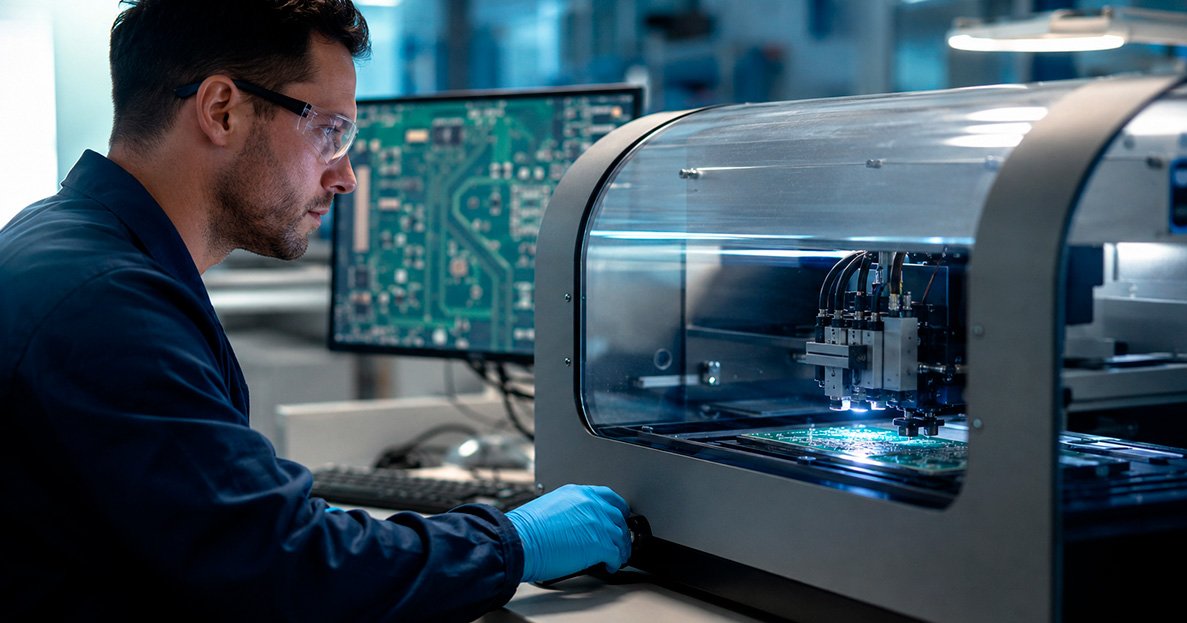
In a world where electronic devices are becoming smaller, lighter, and increasingly integrated into everyday life, a new technology is emerging with the potential to reshape how electronics are designed and manufactured: printed electronics. More than just a passing trend, this innovation is transforming entire industries by delivering solutions that are more flexible, sustainable, and accessible.
What Are Printed Electronics?
Printed electronics involve the production of electronic circuits and components using printing techniques similar to those employed in the graphic arts industry. Instead of relying on traditional manufacturing methods, such as etching rigid circuit boards, this technology uses conductive inks—made from materials such as silver, carbon, or conductive polymers—that are deposited onto flexible substrates like plastic, paper, or textiles.
The result is a new generation of ultra-thin, lightweight electronic devices that can often bend, flex, or even roll. This approach makes it possible to integrate electronic functionality into surfaces that were once considered impractical, from smart packaging and product labels to wearable sensors and medical devices.
How Does It Work?
The manufacturing process is based on the controlled deposition of functional materials onto a substrate. Several printing methods are commonly used, including:
- Screen printing: Ideal for thicker layers and high-volume production.
- Inkjet printing: Offers greater precision and customization capabilities.
- Flexographic and gravure printing: Commonly used in continuous industrial processes designed for large-scale manufacturing.
Each of these techniques enables manufacturers to build different layers of an electronic device—including conductors, semiconductors, and dielectric materials—creating complete circuits without the need for complex or expensive production processes.
What’s Driving Market Growth?
The rise of printed electronics is no coincidence. It is being fueled by a combination of technological advances and evolving market demands.
1. The Expansion of the Internet of Things (IoT)
The rapid growth of connected devices requires solutions that are more affordable and easier to integrate. Printed electronics enable the large-scale production of smart sensors and intelligent labels, accelerating adoption across industries such as logistics, healthcare, and retail.
2. Sustainability and Environmental Efficiency
Compared to conventional manufacturing methods, printed electronics significantly reduce material waste and energy consumption. In addition, the use of recyclable or biodegradable substrates is opening the door to more environmentally responsible electronic products.
3. Growing Demand for Lightweight and Flexible Devices
From wearable technologies to smart packaging applications, both consumers and businesses are seeking products that adapt to new form factors and use cases. Printed electronics are uniquely positioned to meet this demand, enabling innovative designs without compromising functionality.
4. Lower Barriers to Production
By simplifying manufacturing processes, printed electronics make it easier for new players to enter the market, encouraging innovation and accelerating product development cycles.
Key Benefits
The adoption of printed electronics offers several advantages over conventional electronic manufacturing:
- Lower production costs: Streamlined processes and scalable printing technologies help significantly reduce manufacturing expenses.
- Greater design flexibility: Circuits can be integrated into curved surfaces, textiles, and other non-traditional materials.
- Improved manufacturing efficiency: Faster, more scalable production methods make printed electronics ideal for high-volume applications.
- Expanded innovation opportunities: The technology enables entirely new products, including disposable sensors, smart labels, flexible displays, and wearable medical devices.
Expanding Applications Across Industries
The versatility of printed electronics has accelerated adoption across a wide range of sectors.
In healthcare, the technology is being used in biomedical sensors and wearable monitoring devices that support more accessible and continuous patient care.
Within the automotive industry, printed electronics are finding applications in smart interior panels and flexible lighting systems that enhance both functionality and design innovation.
In retail and logistics, they enable the development of RFID labels and intelligent packaging solutions that improve product traceability and inventory management.
Meanwhile, in consumer electronics, printed electronics are driving innovation in wearables, flexible displays, and next-generation smart devices designed to meet evolving consumer expectations.
Looking Ahead
Discover the technologies transforming electronic design, flexible manufacturing, and the development of smarter products. Join us at Global Supplier to connect with manufacturers, buyers, and innovative solutions shaping the future of the electronics and home technology industries.
References:
20 Beneficios Económicos de la Industria Electrónica en México
https://novacentrix.com/es/printed-electronics
Printed Electronics: The Technology Driving the Smart Devices of the Future
La popularización de la electrónica impresa para crear nuevos productos
https://www.imarcgroup.com/report/es/mexico-printed-electronics-market


