
Phygital Retail: How to Sell Consumer Electronics and Home Products in an Omnichannel World
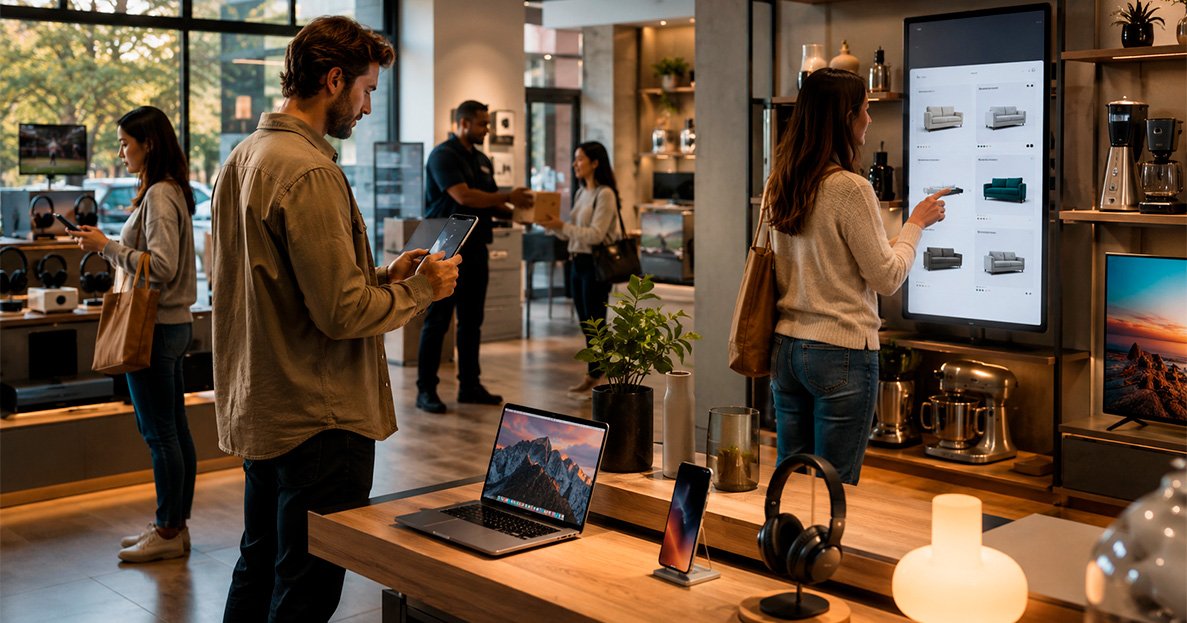
Retail is no longer divided between physical and digital channels—today, it’s a single, interconnected experience. Consumers research online, compare products, seek inspiration on social media, and decide where to buy based on whatever is most convenient at that moment. From this convergence emerges phygital retail, a model that blends both worlds to create shopping experiences that are faster, more informed, and increasingly relevant.
In categories such as consumer electronics and home products—where technical research and hands-on experiences go hand in hand—embracing this approach is no longer optional. It has become a critical competitive advantage.
From Channels to Ecosystems: The New Customer Journey
The traditional path to purchase is no longer linear. Today, a customer may discover a product on social media, research it on a marketplace, compare prices on an e-commerce site, test it in a physical store, and ultimately complete the purchase from a mobile device.
This hybrid behavior requires brands and retailers to build omnichannel ecosystems that are seamless, consistent, and customer-centric.
In consumer electronics, for example, shoppers frequently research technical specifications, watch video reviews, and seek peer recommendations before visiting a store. In the home products category, visual inspiration—from social platforms to in-store displays—often plays a decisive role in the final purchase decision. In both cases, the experience must be complementary and cohesive across every touchpoint.
What Does It Mean to Be “Phygital” in Practice?
Adopting a phygital strategy goes beyond simply being present across multiple channels. It means integrating those channels in a way that allows them to function as a unified ecosystem.
Some key practices include:
1. Integrated Inventory and Logistics
Enable customers to purchase online and pick up in-store (click-and-collect), verify product availability in real time, or receive fast deliveries fulfilled from nearby locations.
2. Physical Stores as Experience Centers
Rather than serving solely as points of sale, stores become destinations where consumers can interact with products firsthand, receive expert guidance, and gain confidence in their purchasing decisions.
3. Strategic Use of Data
Collecting and analyzing customer data allows retailers to personalize recommendations, anticipate consumer needs, and enhance experiences across every channel.
4. Unified Customer Service
From chatbots and social media interactions to in-store assistance, customer support should be seamless and consistent regardless of how consumers choose to engage.
5. Digital Content That Drives Conversion
Product reviews, tutorials, side-by-side comparisons, and video demonstrations have become essential tools for educating consumers and reducing purchase uncertainty.
Consumer Electronics and Home Products: Ideal Categories for the Phygital Model
The nature of these categories makes them particularly well suited for the integration of physical and digital experiences.
In consumer electronics, shoppers often combine online technical research with in-store product testing. They compare specifications, watch reviews, and then seek to validate their decisions through hands-on interaction. This behavior not only builds confidence but also raises expectations for retailers, who must offer value beyond competitive pricing.
In the home products sector, purchasing decisions are heavily influenced by inspiration and visualization. Technologies such as augmented reality help consumers envision how products will fit within their living spaces, while physical stores remain essential for evaluating materials, dimensions, and finishes—creating a more informed and satisfying shopping experience.
The Role of Marketplaces and Social Media
Marketplaces have become increasingly important as both discovery and conversion channels, particularly within technology categories. Their extensive reach and ease of use make them strategic partners, although they also create new challenges when it comes to differentiation.
At the same time, social media platforms have evolved far beyond communication tools. They have become legitimate sales channels in their own right. Through social commerce, consumers can discover, evaluate, and purchase products without ever leaving the platform, integrating naturally into the broader phygital ecosystem.
Benefits for Brands and Retailers
A well-executed phygital strategy delivers measurable advantages:
- Higher conversion rates by reducing friction throughout the buying journey.
- Increased average order values through personalized recommendations and cross-selling opportunities.
- Enhanced customer experiences, leading to stronger loyalty and retention.
- Greater operational efficiency through the integration of inventory systems and sales channels.
- Expanded market reach by leveraging multiple consumer touchpoints.
Challenges and Considerations
Transitioning to a phygital model also comes with challenges. Technology integration, data management, employee training, and maintaining consistency across the customer experience all require thoughtful planning and strategic investment.
More importantly, success isn’t about adopting every available tool. It’s about selecting the solutions that genuinely add value for customers while aligning with broader business objectives.
Register now and don’t miss the opportunity to grow your business at Global Supplier:
References:
https://endearhq.com/blog/phygital-retail-definition https://www.devprojournal.com/market-trends/retail/why-retails-future-is-phygital/
https://www.futuremind.com/insights/what-is-phygital-retail/
https://www.sherwen.com/insights/clicks-to-bricks-ecommerce-phygital-retail-strategy
https://www.brigadegroup.com/blog/retail/phygital-retail
https://cosinconsulting.com/soluciones-retail-que-te-ayudaran-en-tu-estrategia-phygital/
https://marketing4ecommerce.mx/que-es-phygital-o-figital-nueva-experiencia-de-compra-omnicanal/


